What Is Reflexology?
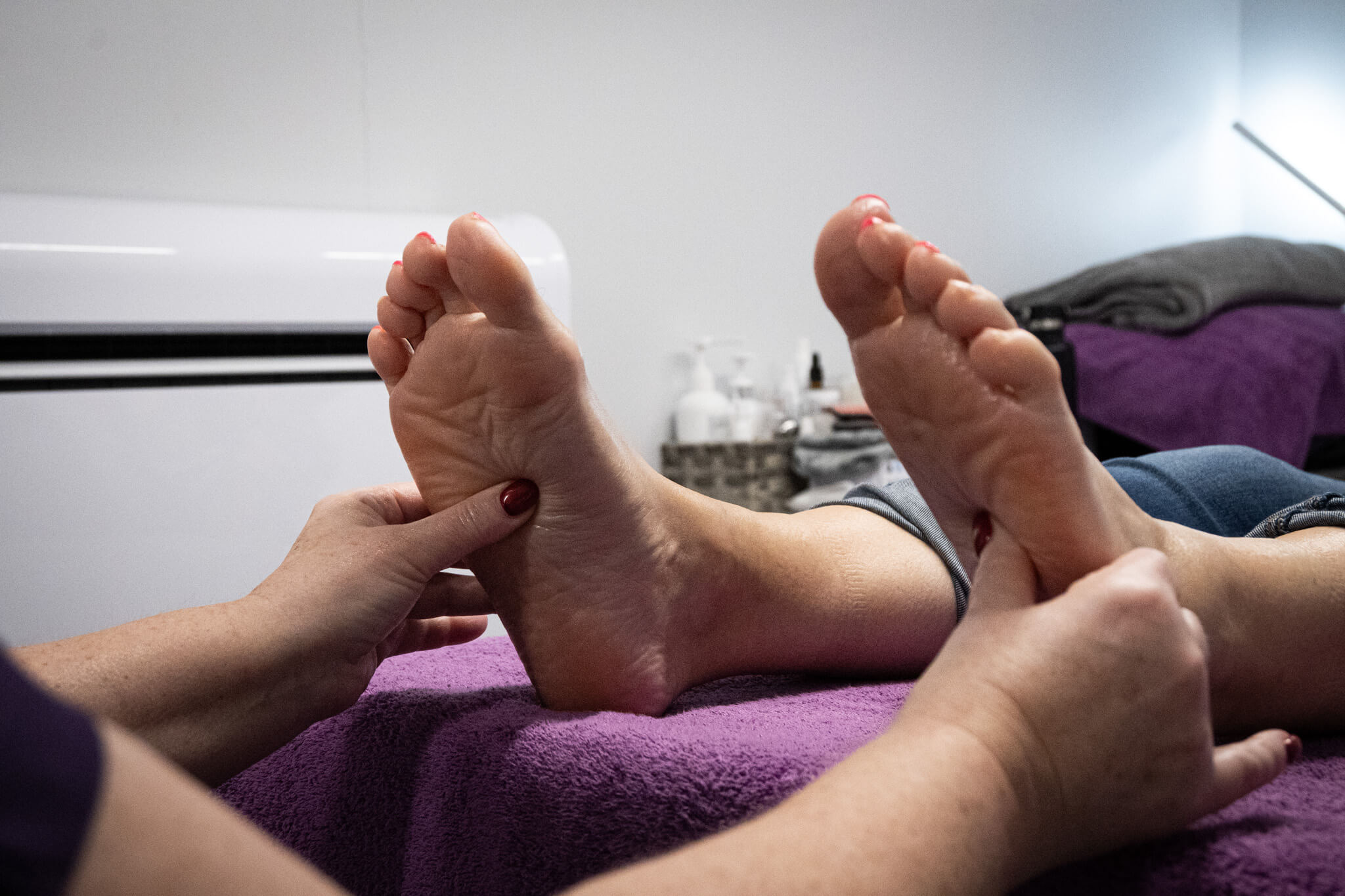
Reflexology is a complementary therapy based on the principle that specific points on the feet, hands, and ears correspond to different organs, glands, and systems throughout the body. Practitioners apply pressure to these reflex points with the aim of promoting relaxation, improving circulation, and supporting the body’s natural healing processes.
Unlike massage, which primarily focuses on muscles and soft tissues, reflexology targets mapped reflex zones believed to be connected to various parts of the body. A typical reflexology session involves applying varying degrees of pressure to these points while the client remains fully clothed, usually focusing on the feet.
Reflexology is widely used as a wellness therapy, and is not used for diagnosis or to replace medical treatment. It should not be considered a replacement for medical diagnosis or treatment.
The Origins of Reflexology
The roots of reflexology stretch back thousands of years. Historical evidence suggests that forms of pressure-point therapy were practiced in several ancient civilizations.
Ancient Egypt
One of the earliest known depictions of foot and hand therapy appears in a tomb at Saqqara, Egypt, dating to approximately 2330 BCE.
For over 2,000 years, Traditional Chinese Medicine (TCM) has emphasised the flow of life energy, or “Qi,” through pathways known as meridians. While modern reflexology is not identical to TCM, many practitioners acknowledge similarities between reflex points and traditional Chinese concepts of energy flow and balance.
Modern reflexology as we know it today developed primarily in the early twentieth century.
Dr. William Fitzgerald and Zone Therapy
In the early 1900s, American ear, nose, and throat specialist Dr. William Fitzgerald introduced the concept of “Zone Therapy.” He proposed that the body could be divided into ten longitudinal zones running from the head to the toes.
Fitzgerald observed that applying pressure to specific points within these zones appeared to reduce pain and produce therapeutic effects elsewhere in the body. His work laid the foundation for modern reflexology.
Eunice Ingham: The Mother of Reflexology
Physical therapist Eunice Ingham expanded Fitzgerald’s ideas during the 1930s and 1940s. Through extensive observation and clinical practice, she developed detailed maps of the feet that linked specific reflex points to organs and body systems.
Ingham believed that the feet provided the most accessible and responsive area for therapeutic treatment. Her charts and teaching methods became the basis of modern reflexology and are still widely used today.
Through books, lectures, and training programs, Ingham helped spread reflexology throughout North America and Europe, where it gained popularity as a complementary wellness practice.
Potential Benefits of Reflexology
Many people seek reflexology to support relaxation, stress management, and overall wellbeing. Benefits may include:
1. Stress Reduction and Relaxation
One of the most commonly reported effects of reflexology is deep relaxation. By stimulating nerve endings in the feet and hands, reflexology may help activate the body’s relaxation response and reduce feelings of stress.
2. Improved Sense of Wellbeing
Many clients describe feeling calmer, more balanced, and mentally refreshed following a session. The focused touch and dedicated relaxation time can contribute to an improved sense of overall wellness.
3. Enhanced Circulation
Some practitioners suggest that reflexology may encourage healthy blood flow, helping oxygen and nutrients reach tissues more efficiently. While more research is needed, improved circulation is often cited as a perceived benefit.
4. Support During Illness and Recovery
Reflexology is frequently used alongside conventional healthcare to help individuals manage symptoms associated with chronic conditions, cancer treatment, anxiety, and recovery from illness. It is often valued for its comforting and non-invasive nature.
5. Better Sleep Quality
Because reflexology promotes relaxation, some individuals report improvements in sleep quality and reductions in insomnia-related symptoms.
What Does Research Say?
Research into reflexology has grown significantly over the past few decades. While many studies suggest positive effects, the scientific evidence remains mixed.
Areas Showing Promise
Several studies have found that reflexology may help reduce:
- Stress and anxiety
- Perceived pain levels
- Fatigue
- Symptoms associated with certain chronic illnesses
- Treatment-related discomfort in some cancer patients
Research conducted in hospital and palliative care settings has shown that reflexology can provide comfort and improve quality of life for some patients, particularly by promoting relaxation and reducing anxiety.
Why Reflexology Remains Popular
Despite ongoing scientific debate, reflexology continues to be practiced worldwide. Its popularity likely stems from several factors:
- It is non-invasive and generally considered safe.
- Sessions are often deeply relaxing.
- Many people appreciate the holistic approach to wellbeing.
- It can complement conventional healthcare without requiring medication.
For those seeking natural ways to manage stress and support overall wellness, reflexology offers an accessible and gentle therapeutic option.
Reflexology at Reflexions began in 2013 when Nikki enrolled in a year long Level 3 VTCT Reflexology course. This was extensive training in Reflexology. This was how Reflexions and all it is today began. Year after year Reflexology has continued to show her how beneficial and therapeutic it is for all the clients she treats. The one treatment where Clients truly learn to relax.